

CRAFT COMEDY INDUSTRY SURVEYS & REPORTS
Key Comedy Industry Reports
All reports and data are subject to copyright. Please credit the original authors when citing, quoting, or reproducing any content.

ARts council england (ace) comedy-specific funding Advice SESSION surveY
MAY 2026 • UK PARLIAMENT
As a professional in the comedy industry, your insights are invaluable.
CRAFT welcomes you to participate in this independent survey, which will gather evidence to help Arts Council England (ACE) curate a comedy-specific live-streamed advice session: ACE will discuss project funding and answer questions about their funding process.
We would like to know what questions you have for ACE about:
their current funding process; and
what areas ACE should focus on for comedy.
Arts Council England (ACE) is conducting the live-streamed advice session and managing the attendee list.
CRAFT, the Comedy Representation and Artform Trust, is a charity (in formation), the national body for the entire comedy industry ecosystem—and the data controller for this survey. Non-identifying data will be given to ACE, to help curate this comedy-specific live-streamed advice session.
🕒 Survey Opened
23:59 BST, Wednesday 28 April 2026
⏳ Survey Closed
18:00 BST, Monday 26 May 2026
CRAFT is inviting responses from all professionals in the comedy ecosystem, including healthcare and community practitioners. Responses are anonymised and confidential. For more information, please read the FAQs below.
To note - the live-streamed ACE advice session:
Will be held online May 28 2026, between 10:30am - 12:00pm
Please register to attend at ACE’s Eventbrite page (link). Note: only ACE will be managing the attendee list.
ACE have suggested to read the application guidance (link) for National Lottery Project Grants (ACE: “it would be helpful to read this before the session, although not essential").
The session will be recorded and made public for anyone to view online.
To note - the aims of this advice session are:
To increase the comedy industry’s knowledge of the existing grants programme and help potential applicants better understand the process and what makes a successful application.
Not to discuss changes to how ACE works or runs its business or to make points about the comedy sectors campaign for artform recognition (this is as already an ongoing conversation between CRAFT and ACE).
Thank you to Arts Council England and the CRAFT team who helped prepare this survey, including Ro Dodgson, James Sharp, Lynne Parker, Lu Jackson, Jake Jefferson, as well as Keith Palmer of The Comedy School.
Survey FAQs
-
Arts Council England (ACE) is the national development agency for creativity and culture in England. It is a public body that distributes funding from the UK Government and the National Lottery to support artists, arts organisations, museums, and libraries.
The Strategy
ACE operates under a long-term strategy designed to support a vision where the creativity of everyone is valued and everyone has access to high-quality cultural experiences. This work focuses on three main outcomes:
Creative People: Helping individuals develop and express their own creativity.
Cultural Communities: Ensuring villages, towns, and cities thrive through culture.
A Creative and Cultural Country: Supporting a sector that is innovative and world-leading.
Comedy and ACE
While comedy is a significant part of the UK’s cultural identity and economy, it does not currently have its own dedicated funding discipline within ACE. Instead:
Categorisation: Comedy is usually supported under the broader umbrella of Theatre.
Funding: Individual comedians and promoters can apply for National Lottery Project Grants for tours, development, or festivals, provided the work meets specific quality and public benefit criteria.
Why This Survey Research Matters
Because ACE is the primary source of public investment for the arts, understanding how they view, fund, and engage with comedy is vital for the long-term sustainability of the industry. CRAFT’s survey helps gather the evidence needed to advocate for the specific needs of comedy professionals.
-
CRAFT and ACE are inviting responses from any professional working in UK the comedy ecosystem, including those working in comedy healthcare.
-
Arts Council England (ACE) will use this data to inform their comedy-specific National Lottery Project Grants Advice Workshop on May 28.
This workshop is designed specifically for those working in comedy who want to develop strong applications for:
National Lottery Project Grants (NLPG)
Developing Your Creative Practice (DYCP)
The comedy industry can learn how ACE programmes work, what assessors are looking for, and how to turn ideas into a compelling application. There will also be time to ask questions directly to ACE staff.
-
Yes, please share it widely with anyone in the comedy industry. The more perspectives we collect, the stronger the data—and better data leads to better outcomes.
-
Comedy is a distinct artform with its own culture, craft, techniques, economic value, and creative ecosystem. Visit CRAFT’s full definition of comedy.
-
Your Privacy is Our Priority
About This Research
This research is conducted by CRAFT, who acts as the data controller. You have been invited to participate as a member of the comedy industry. The purpose of this study is to gain a deeper understanding of the questions the industry wants to ask Arts Council England (ACE) and how CRAFT can help facilitate those answers.
The results of this research will be submitted to ACE and may be used by CRAFT for future projects.
Participation & Anonymity
Participation is entirely voluntary. You are under no obligation to complete this questionnaire, and you may exit the survey or withdraw at any time without giving a reason.
We do not collect personally identifiable information (such as names or contact details) within the survey itself. While you may choose to share personal experiences in open-text boxes, we ask that you do not include identifiable information. If you choose to provide an email address to stay informed of results or to watch live evidence sessions, this data will be managed securely and will not be used to identify your survey responses.
Data Handling & Security
Platform: We use Google Forms to conduct this research. You can review Google’s Privacy Policy for details on their data handling.
Storage: Your data will be anonymised and kept on a secure device, accessible only by those undertaking the research.
ACE Disclosure: No identifiable information will be shared with ACE without your specific consent.
After the Survey
Upon submission, you will be provided with a link to a separate page on our website. There, you can:
Optionally register to receive the final survey report (this is managed separately from your responses to maintain anonymity).
View our full Privacy Policy page.
Contact
If you have a question, concern, or complaint, please contact the research team at: insights [@] thecraft [dot] lol.

CRAFT has led major comedy industry roundtable events with the Government at UK Parliament (see below).
We actively work daily with the Government to widen access, develop sustainable pathways, set standards and safeguarding, defend freedom of artistic expression and inclusion, and build the evidence base to unlock public and private investment.
This work has been led by Lu Jackson for 4 years—first in a solo capacity as the Founder and CEO of comedy technology platforms Craic and Craic Health: Comedy-on-Prescription—and more recently, as the Founder and Chair of CRAFT CIO (charity in formation) officially launched on Friday 6 March, 2026.
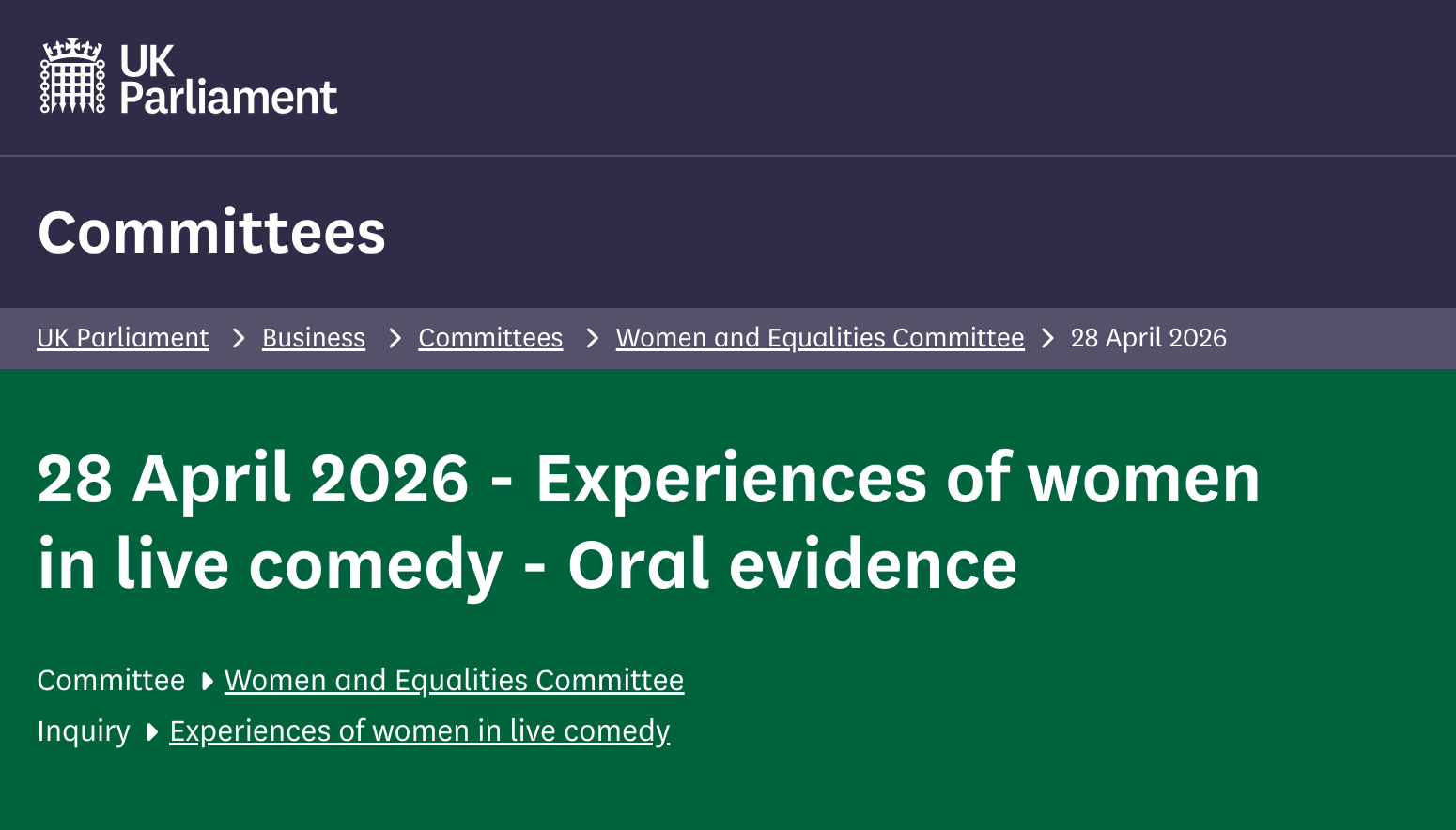
April 28, 2026
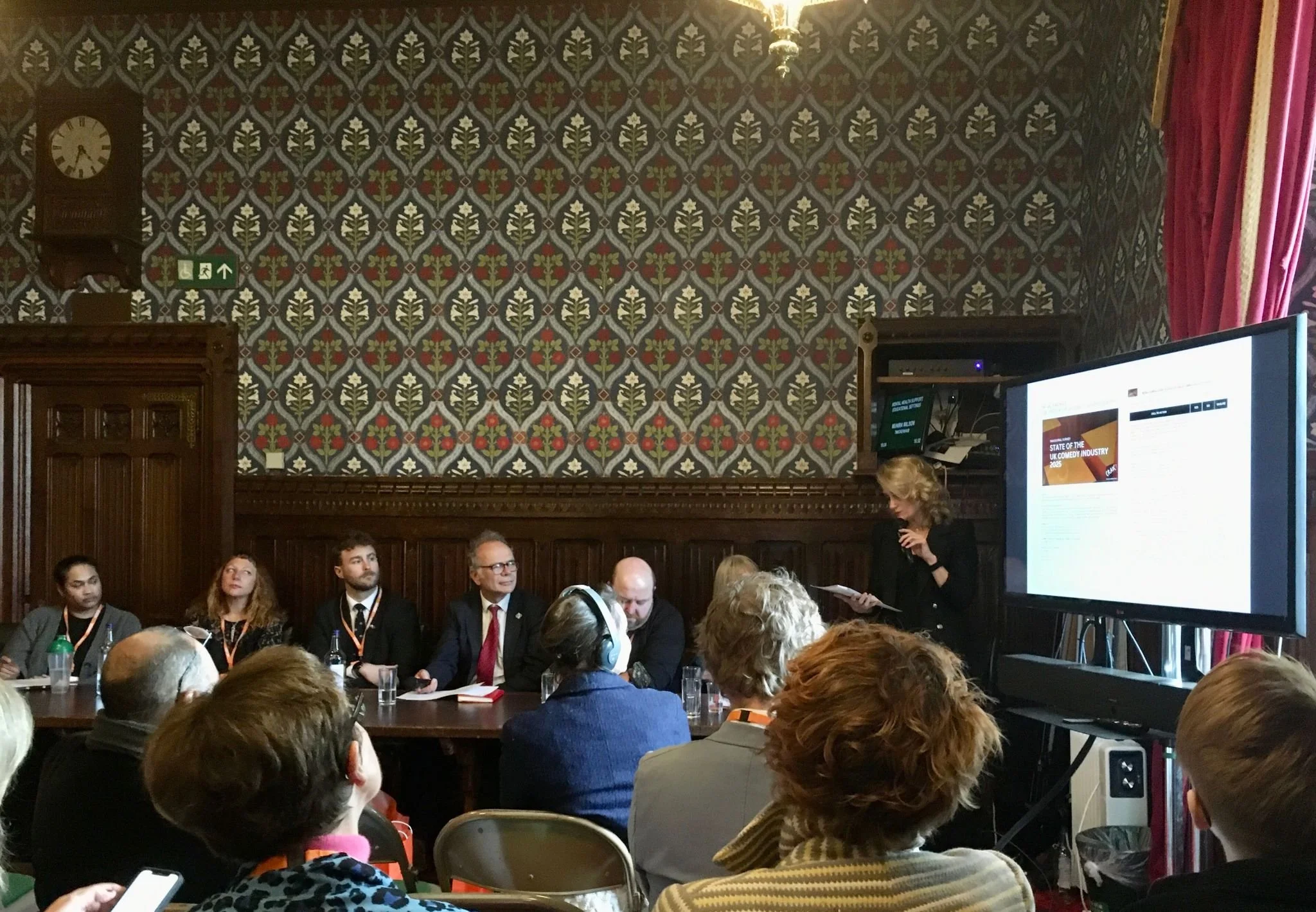
Misogyny in Comedy Inquiry (Session 2: Link)
MPs hear from: Aimee Perry (Frog & Bucket), Jessica Toomey (LCA), Kelly Edwards-Good (Komedia), Kirsten Muat (Equity), Lu Jackson (CRAFT), Lynne Parker (Funny Women).
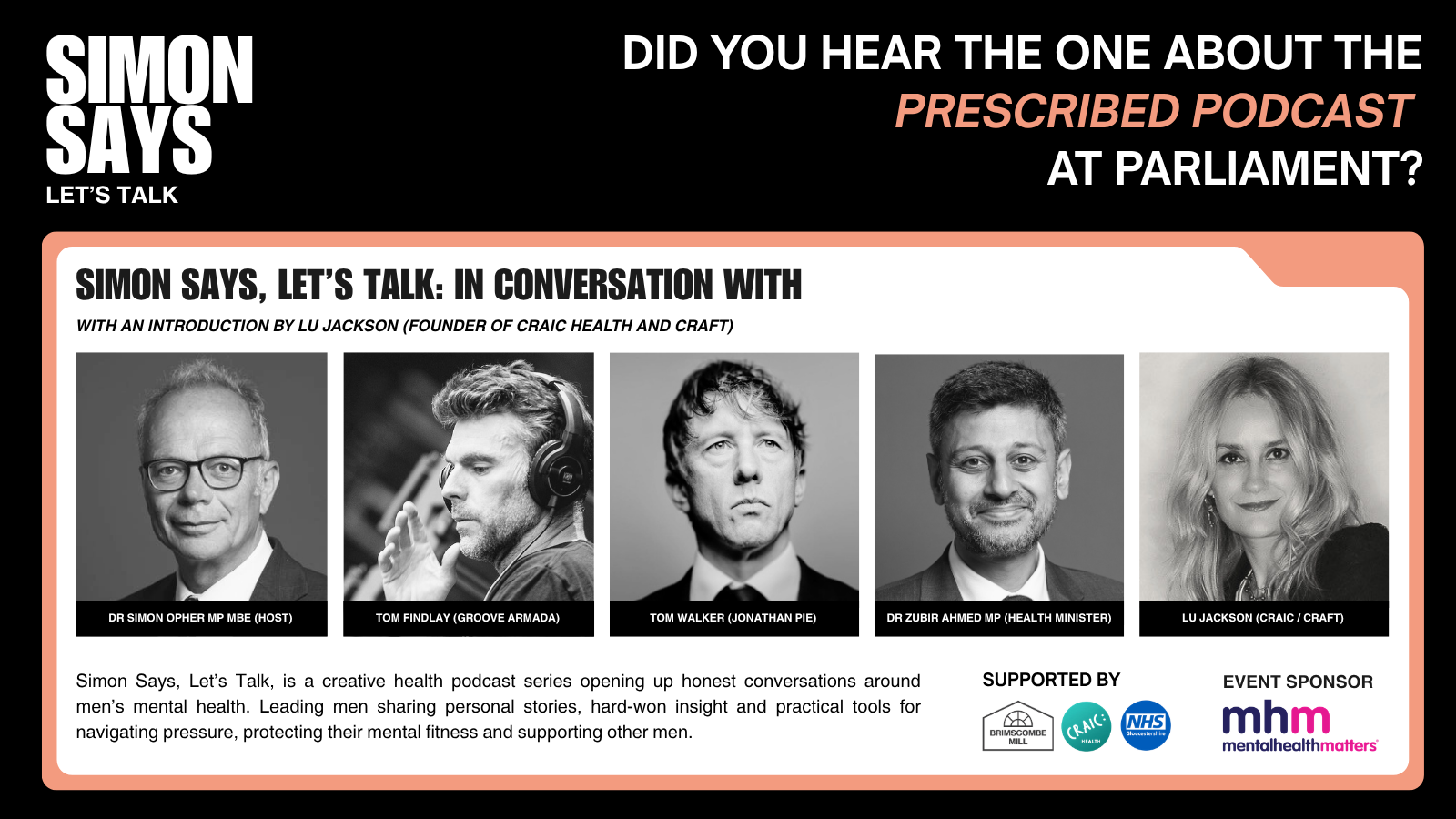
April 22, 2026
Men and Comedy: Creative Healthcare (Invite only; no link)
Health Minister Dr Zubir Ahmed MP, Dr Simon Opher MP, Tom Walker (Jonathan Pie), Tom Findlay (Groove Armada), and Lu Jackson (Founder Craic/CRAFT).
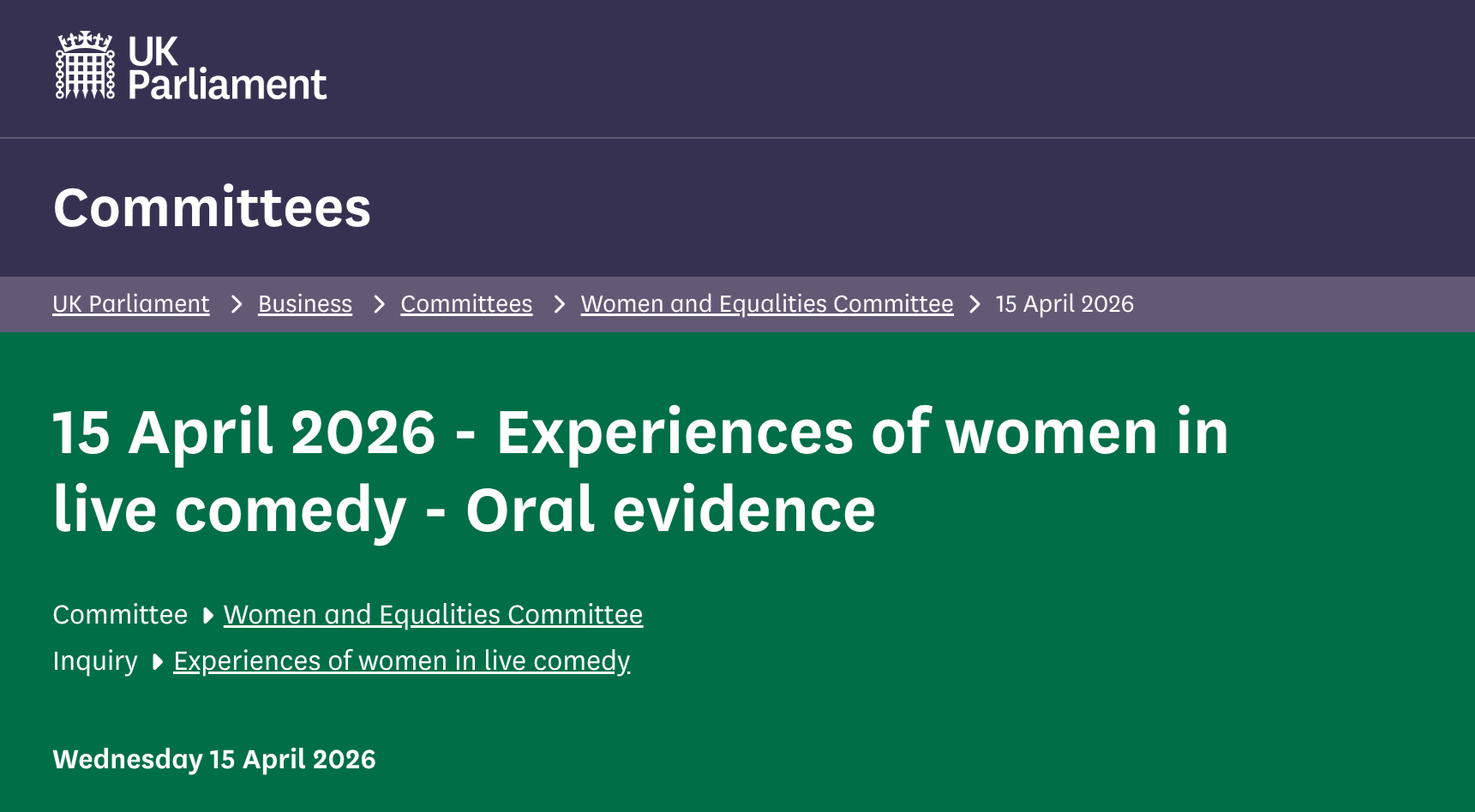
April 15, 2026
Misogyny in Comedy Inquiry (Session 1: Link)
MPs will hear from: Nina Gilligan (Comedian, Co-founder at Get Off Live Comedy), Ola Labib (Comedian, Writer), and Rachael Healy (Journalist, The Guardian / The Observer).
March 9, 2026
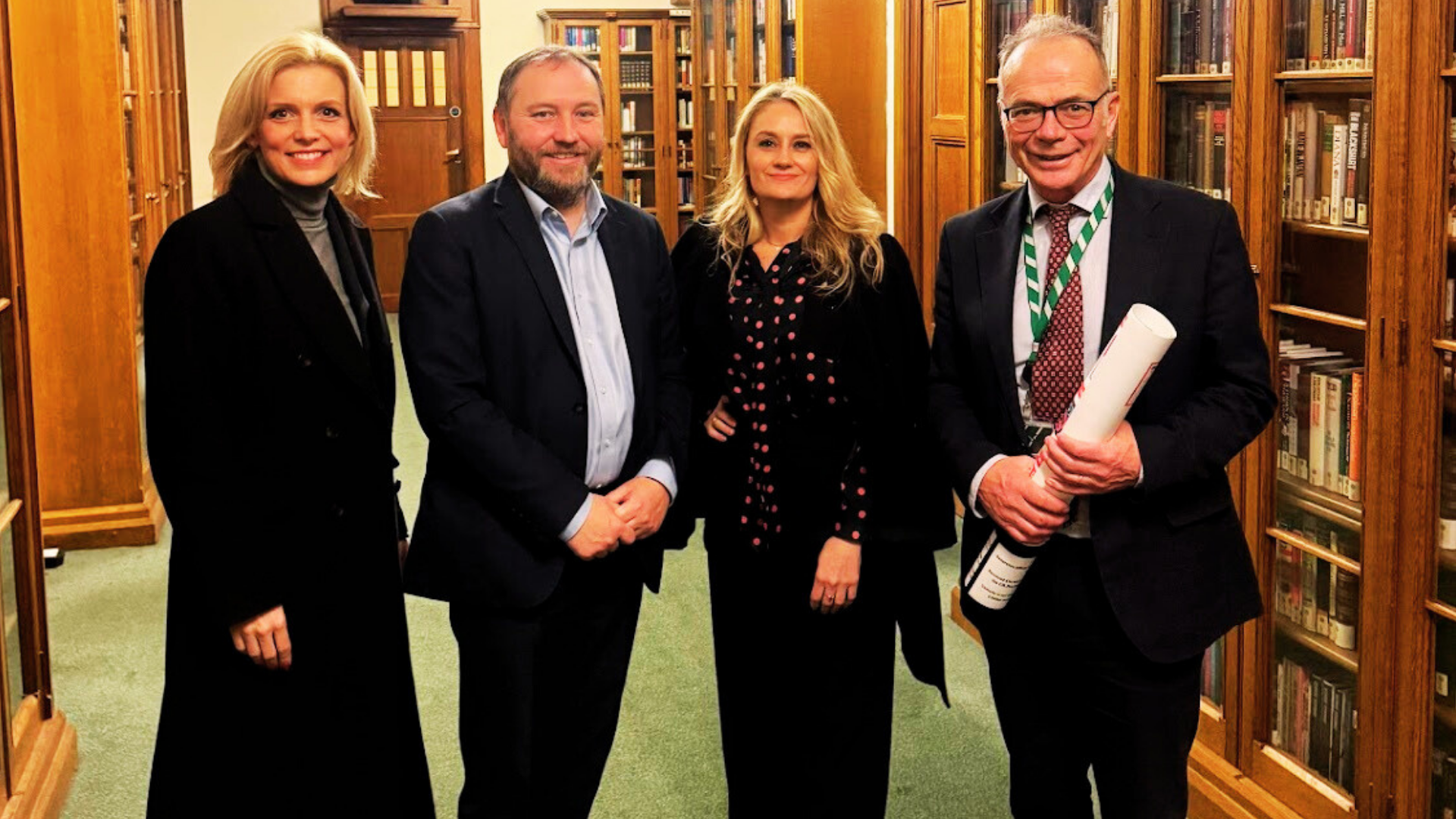
Ministerial Roundtable on Comedy (live, broadcast, recorded, digital, visual/illustrative)
Culture and Technology Minister The Rt Hon Ian Murray MP, Samantha Niblett MP, Dr Simon Opher MP, and Lu Jackson (Founder Craic/CRAFT).
October 15, 2025
London Business and Growth Roundtable
Co-hosted by: Howard Dawber (Deputy Mayor of London), Dr Simon Opher MP, Rachel Blake MP, and Lu Jackson (Founder Craic/CRAFT).

March 13, 2025
Comedy-on-Prescription Roundtable
Co-hosted by: Dr Simon Opher MP and Lu Jackson (Founder Craic/CRAFT).

Women & Equalities Committee (UK Government)
Misogyny in Comedy Inquiry
APRIL 2026 • UK PARLIAMENT
THIS SURVEY CLOSED⏳ 17:59 BST, MONDAY 27 APRIL 2026
Survey Report to be published Q2 2026
CRAFT invited the comedy professionals to participate in an independent survey to gather evidence for the Women & Equalities Committee’s Misogyny in Comedy Inquiry. The main focus is on the live comedy environment, however we recognise the links across digital, broadcast, streaming, visual and illustrative work, and the wider businesses around live comedy.
Open to all genders, responses were anonymised and confidential. For more information, please read the FAQs below.
Thank you to the Women and Equalities Committee MPs and Clerks; and the CRAFT team who helped prepare this survey, including Carly Smallman, Dan Dearlove, Jake Jefferson, James Sharp, Prof. Lesley Sloss, Lu Jackson, Lynne Parker, and Prof. Sam Beale.
The Women and Equalities Committee examines the work of the Office for Equality and Opportunity (OEO). Made up of cross-party MPs, it holds Government to account on equality law and policy, including the Equality Act 2010 and cross Government activity on equalities. It also scrutinises the Equality and Human Rights Commission.
The Misogyny in Comedy Inquiry is taking place at UK Parliament where MPs will hear experiences of women in live comedy.
CRAFT invited responses from all genders and all professional roles in the comedy ecosystem, including but not limited to:
Performers
Writers
Promoters
Producers
Agents / Managers
Venue Teams and Crew
Supporting Business Professionals
The Women & Equalities Committee (UK Government) is conducting the Misogyny in Comedy Inquiry sessions.
CRAFT, the Comedy Representation and Artform Trust, is a charity in formation and the national body for the entire comedy industry ecosystem—and the data controller for this survey.
CRAFT has led major comedy industry roundtable events with the Government at UK Parliament.
Misogyny in Comedy is but one campaign of much broader policy work between CRAFT and the government.
Our large founding team—men, women and non-binary comedy and non-industry professionals, including political patrons—collectively support this campaign as one measure to improve the industry for all.
We actively work daily with the Government to widen access, develop sustainable pathways, set standards and safeguarding, defend freedom of artistic expression and inclusion, and build the evidence base to unlock public and private investment.
This work has been led by Lu Jackson for 4 years—first in a solo capacity as the Founder and CEO of comedy technology platforms Craic and Craic Health: Comedy-on-Prescription—and more recently, as the Founder and Chair of CRAFT CIO (charity in formation) officially launched on Friday 6 March, 2026.
Survey FAQs
-
Select Committees are cross-party groups of MPs that gather evidence, question witnesses, and publish reports to the UK Government. Their findings can influence policy, funding, regulation, and industry standards.
The Women and Equalities Committee examines the work of the Office for Equality and Opportunity (OEO). It holds Government to account on equality law and policy, including the Equality Act 2010 and cross Government activity on equalities. It also scrutinises the Equality and Human Rights Commission.
The Misogyny in Comedy inquiry is taking place at UK Parliament where MPs will hear experiences of women in live comedy.
-
We are inviting responses from all genders and all professional roles in the live comedy business ecosystem, including but not limited to performers, writers, promoters, producers, venue teams, and supporting businesses.
You do not need to be a woman or have experienced misogyny yourself to take part.
Responses from all genders are important—your voice needs to be seen to be heard.
The inquiry is about improving standards, fairness, safeguarding, and trust across the industry. It is not about blaming one group or removing opportunities from another. It is about building a better industry for everyone. Your insights matter.
-
The survey results will be presented on Tuesday April 28 at UK Parliament to the Women & Equalities Committee, by Lu Jackson (in her remit as Founder and Chair of CRAFT).
The final report will be widely shared, at a later date, as a key resource for the comedy industry, policymakers, industry stakeholders, and media outlets.
-
Yes, please share it widely with anyone in the comedy industry. The more perspectives we collect, the stronger the data—and better data leads to better outcomes.
-
Misogyny means hostility, prejudice, discrimination, or unfair treatment towards women, including sexism, assault, and harassment.
-
Comedy is a distinct artform with its own culture, craft, techniques, economic value, and creative ecosystem. This survey mainly focuses on live comedy, while recognising links across digital, broadcast, streaming, visual and illustrative work, and the wider businesses around it.
-
Your Privacy is Our Priority
Survey Platform
CRAFT uses Google Forms to conduct this research. This platform is configured to ensure your data remains confidential. You can review Google’s Privacy Policy for further details on their data handling.Participation & Anonymity Participation is entirely voluntary, and you may exit the survey at any time. We do not collect personally identifiable information (such as names or contact details) within the survey itself. While you may choose to share personal experiences in open-text boxes, we ask that you do not include identifiable information.
After the Survey
Upon submission, you will be provided with a link to a separate page on our website. There, you can:Access a comprehensive list of support and crisis resources.
Optionally register to receive the final survey report (this is entirely voluntary and managed separately from your survey responses to maintain anonymity).
You can also view our full Privacy Policy page.